Some Stories Refuse to Be Short. This Is One of Them.
A note before you begin: this is a longer read. I don’t write like this often. But some things cannot be compressed without losing what matters most. Thank you, genuinely, for the gift of your time and attention.
I received a nomination for an award.
And my first response was stillness. Not excitement. Stillness.
The kind that arrives when something names, clearly and out loud, what you have been quietly building for years. When external recognition meets internal knowing,
there is a particular quality of silence. Not emptiness. More like arrival.
So before I share what the award is, I want to share where it came from. Because origin stories matter to me more than outcomes. And because I think the path says more about the work than any title ever could.
It Began with a Lab
It started with For English Sake: Educational Lab.
A space I created for lifelong learners, teachers, educators, students, and professionals who sensed (sometimes without being able to name it) that language learning could be something other than what they had been told it was.
Not a checklist. Not a performance. Not a test to pass and forget.
A process of becoming more aware. Of the world, of others, of yourself.
That might sound abstract. It isn’t. Language is the most intimate technology we carry.
It shapes how we perceive, categorise, argue, connect, and ultimately how we think.
When I work with someone on language, I am not just working on vocabulary or grammar.
I am working on the lens through which they see everything else.
That was the premise of For English Sake.
And it remains the premise of everything I have built since.
The Philosophy Grew.
That lab became a philosophy. And the philosophy found its global stage through partnership with Mohamed Nabil, founder of Educast.
I want to say this clearly: what we have built together did not happen by accident
or by ambition alone. It happened through years of genuine collaboration.
Long nights of brainstorming that stretched well past midnight. Sleepless conference days when the logistics were collapsing and the vision was holding us upright. Honest, sometimes difficult, conversations about the frustrating reality of education quality in too many countries, regions, and programs. And always, Mohamed checking in. Not just on the project. On me.
That kind of partnership is rare. The kind where another person sees your vision not as an interesting idea, but as something real and worth protecting. Thank you, Mohamed. For every conversation that pushed this further than I could have taken it alone.
For the trust, the consistency, and for building this with me.
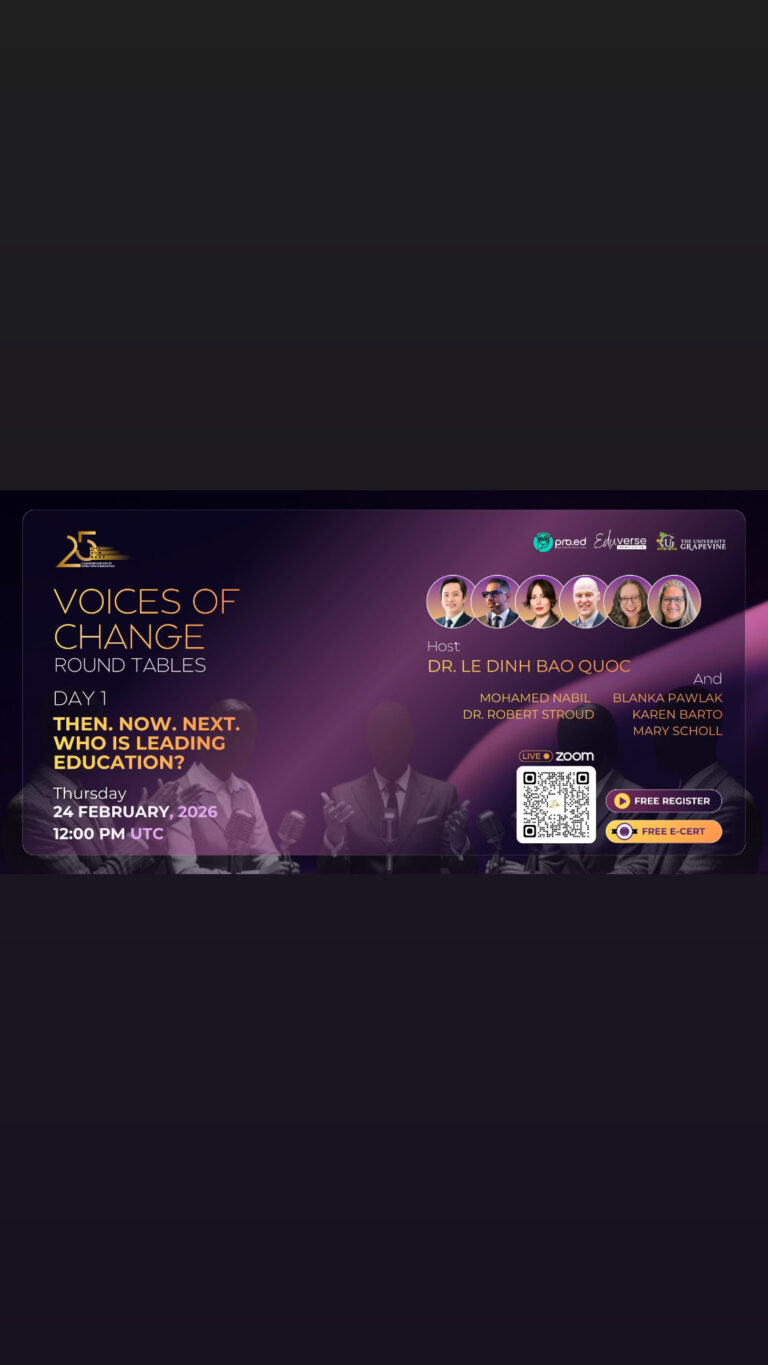
For English Sake grew into a partnership with the Educast International Conferences,
now a global dialogue connecting educators and leaders across more than 140 countries. Not to transfer information. To exchange perspectives. To ask harder questions together than any of us could ask alone.
What does it mean to build something that outlasts a single event or a single year? What does it mean to build a community rather than an audience?
These questions are still on my mind.
What I Learned from People Who Never Separated Mind from Life
In the middle of all this building, something shifted in how I understood education itself.
My encounters with indigenous communities, different ones in different parts of the world, taught me something that no academic framework had named as clearly for me before. These communities do not separate learning from living. They do not treat knowledge as something you acquire and store. They treat it as something you inhabit.
Something relational, context-dependent, and always in conversation with the world around you.
I am not romanticising this. Every culture has its blind spots, and I entered those encounters as a learner, not an authority. But what I observed, repeatedly, was a coherence between mind and body, between individual growth and communal responsibility, between knowing something and living it, that our mainstream education systems have largely lost.
Research in cognitive science and neuroscience is increasingly pointing in the same direction. The brain does not learn in isolation. It learns in relationship, through experience, through meaning-making that is tied to context and emotion.
We have known this for decades in theory. Indigenous ways of knowing have practised it for millennia.
That convergence changed the questions I ask in my work. Not just: what should we teach? But: in what kind of environment? With what quality of attention? With what understanding of who the learner already is?
It all depends on those answers. Always.
When was the last time you learned something not from a book or a course, but from simply being present with people whose way of seeing the world was fundamentally different from yours?
What Intelligent Growth Actually Looks Like
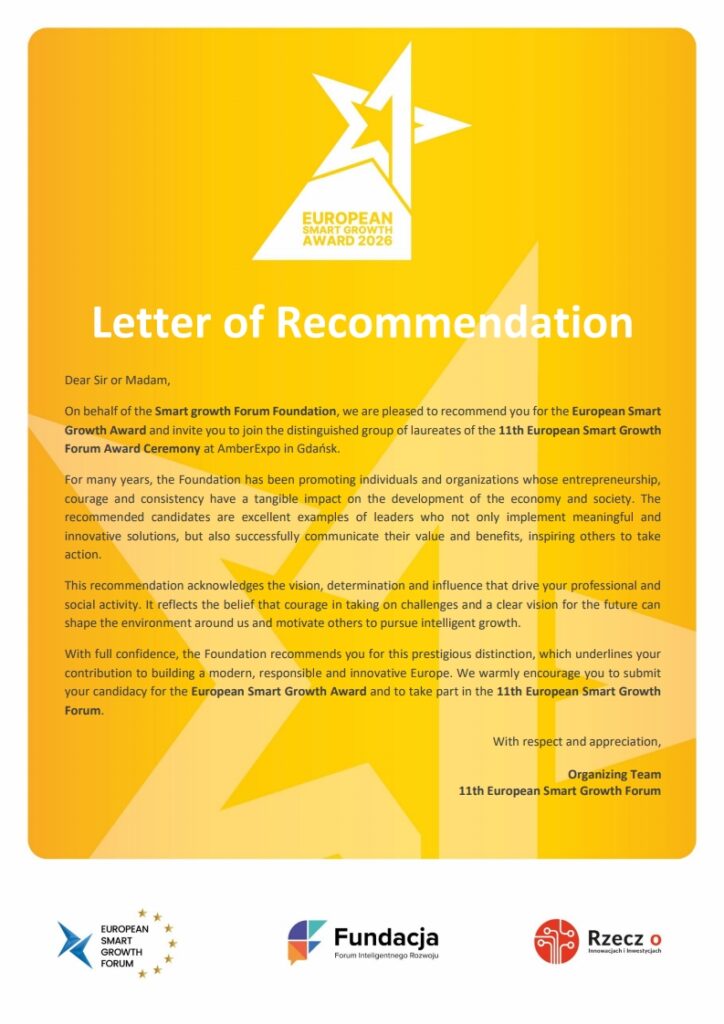
The nomination I received is the European Smart Growth Award 2026, from the Fundacja Forum Inteligentnego Rozwoju (the Foundation of the Smart Development Forum),
in the context of their 11th European Forum for Smart Growth, taking place in Gdańsk, September 2026.
The recognition honours this arc: from a single educational lab to a systemic, international initiative integrating linguistic education with cognitive science, mindfulness, emotional intelligence, and ethical leadership.
I am sharing this not to mark an achievement. I am sharing it because I want to be honest about what I think intelligent growth actually looks like. And it does not look like scaling fast.
It looks like building deliberately. From a clear philosophy, in genuine partnership,
with patience for the long arc. It looks like being willing to ask uncomfortable questions about quality when everyone else is celebrating quantity. It looks like staying in the conversation even when the conversation is hard.
The competencies we are building toward as a global community: analytical thinking, creativity, autoreflection, human-centred leadership, emotional intelligence. These are not soft skills. They are the architecture of the knowledge economy. And they do not emerge from content delivery. They emerge from spaces where people feel safe enough to think differently, to be wrong, to change their minds.
For English Sake is that space. Educast expands it. And encounters with people who have been practising integrated, relational learning for generations reminded me why it matters.
Do you believe that education can change not just what people know, but who they become? And if so, what would need to change in how we design it?
The People Behind the Work
Awards name the work. They rarely name who made the work possible to sustain.
So I want to name them.
Mohamed Nabil: for the professional partnership, the shared vision, and for every sleepless conference night that felt impossible and somehow wasn’t.
And Greg, my partner, my supporter. The person who understood my frustrations with poor quality education not as complaints, but as conviction.
Who believed in my bold vision when it was still mostly in my head. Who never doubted my voice, even when I doubted it myself. Who, in every moment when the weight of all of it felt too much, said quietly and steadily: “You can do it.”
I deeply believe that no meaningful work is built alone.
Every systemic change begins in a relationship. In a conversation. In someone choosing to stay in the room and keep asking the next question.
This award belongs to all three of us. And to EVERY PERSON who has walked through the doors of For English Sake, joined an Educast conference, or simply stayed curious enough to keep learning.
An Invitation, Not a Conclusion
I do not like tidy endings. They flatten what is actually still in motion.
So I will close with this instead.
The future of education, and of any meaningful professional development, will be built by people who understand that language, cognition, emotion, and context are not separate domains. They are one system. And when we treat them as one system, the results are not just more effective. They are more human.
That is what I am building. That is what For English Sake started. That is what Educast International Conferences continues. That is what I learned, sitting with people who never needed a research paper to tell them that the mind and the world it inhabits are inseparable.
Dear reader, I hope to see you on this journey!