BEYOND ACTIVITY: What happened at PASE 2026
"Now I know what I can do at the end of the lesson instead of saying 'do you understand?' or 'do you have any questions?'"
- session participant, PASE 2026
Some conferences leave you with a full notebook and an empty battery.
This one left me with a full notebook, an empty battery, and a list of ideas I can’t wait to bring into practice.
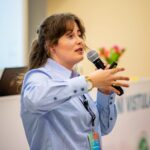
The 12th Annual Conference of the Polish Association for Standards in Language Education PASE 2026 took place at Vistula University in Warsaw. Educators gathering in lecture halls, pushing each other’s thinking, disagreeing productively, laughing loudly, and then going back to their classrooms changed in some small, important way. Sometimes in a big one.
I have been part of this community long enough to know: that combination is rarer than it sounds.
I came not only as a presenter, but as a participant. And I am glad I did.
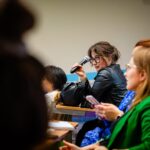
I sat in sessions. I took notes and pictures. I got into conversations in corridors that lasted longer than the talks themselves – about education, about the industry, about the problems we keep circling, about the things that are quietly shifting. There were funny moments. There were moments that genuinely made me think. There were questions I left with that I still haven’t fully answered.
That is what well-organised conferences do.
They don’t resolve everything. They open things up.
The PASE team did that beautifully this year. Organised, intentional, generous with space for dialogue. Coffee, tea and sweets to give participants some energy after hours of discussions. Thank you to every organiser, every volunteer, every person who showed up and contributed to making it what it was. Having organized many events, conferences and venues I know it takes a great team to accomplish that.
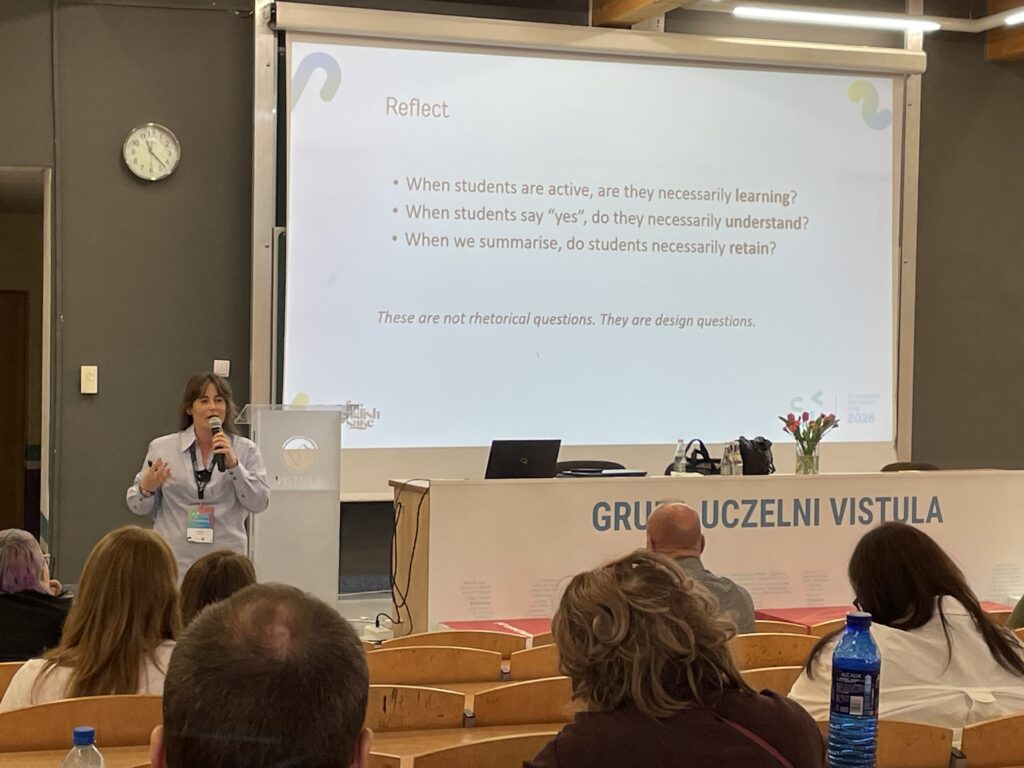
Beyond Activity: Designing Exit Tickets for Depth, Focus and Retention.
I came in with a question the whole session was designed around: what do the last 5 minutes of your lesson currently say about your design priorities?
We started by dismantling a few myths, these tricky ones that live quietly in CPD materials and teacher training programmes, believed not because they’ve been examined but because they’ve been repeated often enough to feel true.
That students know when they’ve understood something. That if the classroom is quiet and on task, learning is happening. That checking for understanding at the end of a lesson is always a good practice.
None of them are entirely wrong. All of them are dangerously incomplete.
We looked at what the Science of Learning actually tells us about retrieval, about depth of processing, about metacognition, and about the difference between performance and retention. We looked at ready-to-use exit tickets designed for real classrooms, from Young Learners through adults, grammar and vocabulary – questions that require retrieval, demand a decision, reveal thinking, and can live twice ( who doesn’t like recycling? 😛 ):
live once as performance data at the end of lesson A, and once as retrieval practice at the start of lesson B.
We ran a design sprint. We reflected. We sat with some productive discomfort. And silnce surrounding individual work.
One of participants came up afterwards and said:
“Thank you! Now I know what I can do at the end of the lesson instead of saying ‘do you understand?’ or ‘did you like it?'”
Once again – I am happy to serve and challenge educators to rethink, explore and think outside the box.
I left Warsaw with more questions than I arrived with which is always the right outcome.
I also left with something else: a clear signal that 40 minutes was not enough.
Many of you asked for a longer workshop format. A full session where we go deeper into the 4 Cognitive Filters, design more examples together, work with your actual lesson content, and build the recycling practice from the ground up.
That is coming. Stay tuned. 🔥
Thank you to everyone who was in the room. Who asked questions. Who pushed back. Who shared their practice. Who wrote something honest on an exit ticket at the end.
The future belongs to those who build bridges – between science and classroom, between theory and tomorrow’s lesson plan, between what we’ve always done and what we now know is possible.
I’ll see you in the next one.
Glenn Standish, Viola Bielecka, Timothy O’Flaherty, Dr Grzegorz Śpiewak, Paulina Dolęga, Jon Hird, Dr Piotr Steinbrich – thank you for all discussions, critical thinking rounds, laughter, chit chats, travel stories, industry ups and downs, and great time in between.